
The MadeByHer Journal
Nimki vs Mathri — What's the Difference?
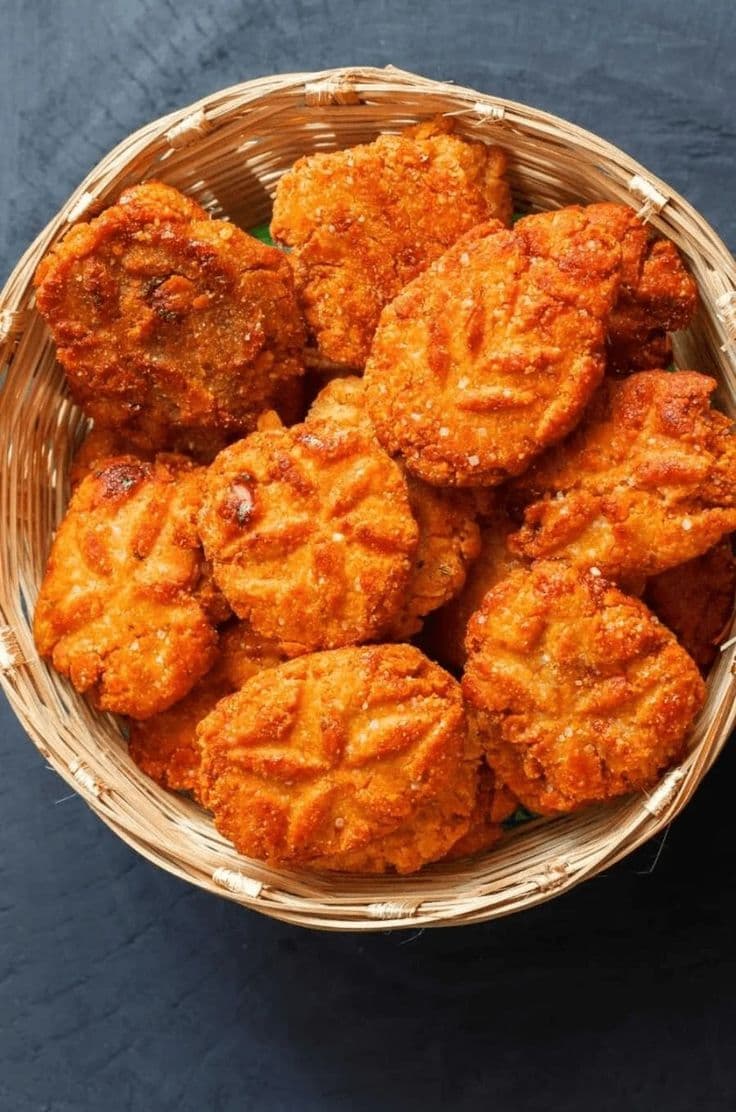
Nimki vs mathri is a comparison that comes up often since both are savoury, fried, flour-based snacks — but they're distinct in shape, texture and regional origin, not two names for the same thing.
Nimki
Nimki is typically thin, diamond or triangle-shaped, and distinctly flaky and crisp, associated most strongly with Bihar and eastern India. The dough uses ghee worked in pastry-style, giving it its characteristic layered crispness that separates slightly when bitten into.
Mathri
Mathri is thicker and denser than nimki, round or slightly flattened, more associated with North Indian and Rajasthani cuisine, often flavoured with ajwain as the dominant spice and sometimes made with a mix of flour and semolina for extra crunch. Mathri's thickness gives it a more substantial, dense bite compared to nimki's thinner, flakier structure.
Texture is the clearest tell
If you're trying to identify which one you're eating: nimki should be thin and distinctly flaky in layers, while mathri is thicker and has a denser, more uniform crunch rather than visible flakiness. Holding both side by side, the visual difference in thickness alone is usually enough to tell them apart before even tasting.
Spice profile differences
Nimki's flavour typically centres on cumin and kalonji (nigella seed), giving it a slightly earthy, aromatic note. Mathri leans more heavily on ajwain (carom seed), which has a sharper, more distinctly pungent flavour that comes through clearly in a well-made mathri.
Shelf life and storage
Both keep reasonably well stored airtight, though mathri's denser structure sometimes gives it a slightly longer practical shelf life than nimki's thinner, more delicate flaky layers, which can be more prone to going soft if not stored carefully.
Both are worth trying on their own terms
Neither is a substitute for the other — they're genuinely different snacks that happen to occupy a similar savoury-tea-time-snack role in their respective regional traditions. If you enjoy one, it's worth trying the other specifically to notice the textural and flavour differences rather than assuming they're interchangeable.
Why the nimki vs mathri confusion persists
Part of why nimki vs mathri gets confused so often is that both are widely available under loosely applied names in different regions — a snack sold as "mathri" in one shop might resemble what another region calls nimki, and vice versa, since neither name is strictly regulated or standardised the way a packaged product name would be. When precision matters, looking at the actual shape and texture is more reliable than the name on the package alone.
Where nimki vs mathri sits in a broader Indian snack landscape
Both nimki and mathri belong to a much larger family of Indian savoury fried flour snacks that varies enormously by region — from Gujarati farsan to South Indian murukku — each with its own shape, spice profile and texture. Understanding the nimki vs mathri distinction is a useful entry point into recognising just how much regional variation exists across what might casually get lumped together as "Indian namkeen."
Making an informed choice when ordering online
If you're ordering online and want the genuine flaky, Bihari-style nimki texture specifically rather than a denser mathri-like result, look for sellers who explicitly describe their product as flaky and diamond or triangle-shaped, made with the ghee-worked-into-flour pastry technique — that description is a stronger signal than the name alone.
Browse homemade nimki, made the traditional Bihari way with the characteristic flaky texture nimki is known for.
Every piece here is made by a real woman running her own small business.
Shop the marketplace →